Disclosure: We may earn a commission from Amazon links on this page. This helps support our independent testing.
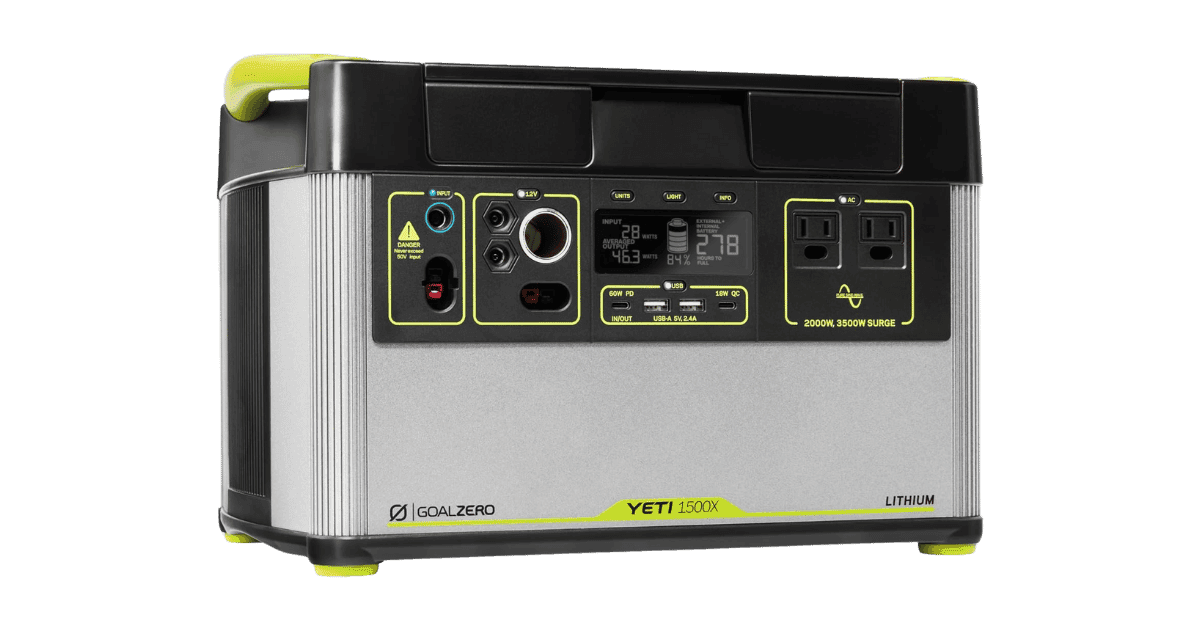
The premium choice for outdoor enthusiasts who demand reliability.
WattsGeek Rating
"Recommended"
The Goal Zero Yeti 1500X is a reliable workhorse for those already invested in the Goal Zero ecosystem. However, for most new buyers, it is outperformed by cheaper, faster, and longer-lasting LiFePO4 options like the EcoFlow DELTA 2 Max.
The Goal Zero Yeti 1500X is the rugged veteran of the portable power world. For years, Goal Zero set the standard for what a 'solar generator' should look like, and the 1500X showcases their commitment to build quality with its sturdy metal enclosure and industrial design. However, the market moves fast. While this unit packs a serious 2000W punch and 1516Wh of capacity, it relies on older Lithium-ion battery chemistry. The question for buyers today is: does Goal Zero's legendary reliability outweigh the limitations of aging technology?
If awards were given for construction, the Yeti 1500X would win gold. Weighing 45.6 lbs (20.7 kg), it is encased in a durable aluminum and ABS shell that feels bulletproof compared to the plastic casings of cheaper rivals. The flat top allows for easy stacking of gear, and the handles are integrated ergonomically. It looks and feels like professional equipment.
With 1516Wh of capacity, the Yeti 1500X sits comfortably between the 1kWh and 2kWh classes.
The 2000W inverter is rock solid. We found it handled power surges from compressors better than some lighter-weight competitors.
This is the Yeti 1500X's Achilles' heel.
Wall Charging: The included 120W power supply is painfully slow, taking roughly 12.5 hours to charge from 0-100%. To get modern charging speeds (under 3 hours), you must purchase the separate 600W Yeti X Power Supply, which adds significant cost.
Solar Charging: If you have the panels, it shines. With 600W of solar input, you can recharge in as little as 3 to 4 hours in prime sun.
This unit is best for brand loyalists who already own Goal Zero solar panels or the Yeti Link vehicle integration system. It is also a solid choice for remote cabin owners who prioritize build quality and solar input over daily cycle life, and who don't mind the slow wall charging speeds.
If you are looking for a daily driver for van life or frequent blackouts, the 500-cycle battery life is a dealbreaker. Modern LiFePO4 units like the EcoFlow DELTA 2 Max last 6x longer (3000 cycles). Also, budget-conscious buyers will find the need to buy an extra fast charger frustrating.
Vs. EcoFlow DELTA 2 Max: The DELTA 2 Max has more capacity (2048Wh vs 1516Wh), charges in 80 mins out of the box (vs 12.5 hours), and lasts 3000 cycles. It is superior in almost every metric.
Vs. Jackery Explorer 1000 v2: The Jackery is much smaller and lighter, but the Yeti 1500X offers significantly more power output (2000W vs 1500W) and better regulated DC ports.
The Goal Zero Yeti 1500X is a well-built classic that has been overtaken by time. While its inverter and build quality remain top-tier, the reliance on older battery chemistry and slow charging makes it hard to recommend at full price in 2024. It serves best as a rugged occasional-use backup rather than a daily workhorse. We rate it a 7.2/10.
| Feature | Laboratory Data |
|---|---|
| Total Capacity | 1,516 Wh |
| Continuous AC Output | 2,000 W (3,500W Surge) |
| Battery Chemistry | Li-ion |
| Cycle Life (80%+) | 500 Cycles |
| Charge Time (AC) | 4 hours |
| Dimensions | 15.3 x 10.2 x 11.4 in |
| Net Weight | 45.6 lbs |
Approximate price. Actual prices may vary by retailer and change over time. Amazon prices fluctuate frequently and may differ from what is shown.