Disclosure: We may earn a commission from Amazon links on this page. This helps support our independent testing.
Trying to decide between a portable power station and a gas generator? We compare cost, noise, runtime, maintenance, and safety to help you make the right choice.
When the power goes out — or when you need electricity off-grid — you have two main options: a portable power station (battery) or a gas generator. Both have their place, but they serve very different needs.
This guide will help you understand the trade-offs and pick the right solution for your situation. Spoiler: for most Americans, the answer isn't "either/or" — it depends entirely on your use case.
| Feature | Portable Power Station | Gas Generator | Winner |
|---|---|---|---|
| Noise Level | 0-30 dB (silent) | 60-90 dB (loud) | Power Station |
| Indoor Use | Yes (safe) | No (CO poisoning risk) | Power Station |
| Fuel Cost | $0 (electricity/solar) | $3-5/hour in gas | Power Station |
| Maintenance | None | Oil changes, spark plugs, carb cleaning | Power Station |
| Runtime | Limited by battery | Unlimited (add gas) | Gas Generator |
| Max Output | Up to 6,000W | Up to 12,000W+ | Gas Generator |
| Upfront Cost | $200-$4,000 | $300-$3,000 | Tie |
| Startup Time | Instant (button press) | Pull-cord + warm-up | Power Station |
| Emissions | Zero | CO, CO2, NOx | Power Station |
| Lifespan | 10+ years (LiFePO4) | 10-20 years | Tie |
| Weight (2,000W class) | 40-60 lbs | 45-65 lbs | Tie |
This is the most clear-cut advantage. Gas generators produce carbon monoxide and must never be used indoors. The CDC reports 430 deaths per year from CO poisoning, with a significant portion from generators. Power stations produce zero emissions and are completely safe to use in your living room, bedroom, or apartment.
Gas generators typically produce 60-90 dB — as loud as a vacuum cleaner or lawnmower. Portable power stations are virtually silent (0-30 dB). This matters for:
Gas generators need regular oil changes, spark plug replacement, air filter cleaning, fuel stabilizer, and carburetor maintenance. A portable power station needs nothing — charge it and use it. There's no fuel to go stale, no engine to maintain, no pull cord to break.
Power stations turn on with a button press and deliver power instantly. Gas generators require pull-starting (which can be difficult in cold weather or for people with limited strength), a warm-up period, and proper choke adjustment.
Pair a power station with solar panels for truly renewable, fuel-free energy. During extended outages, solar panels can recharge your power station daily at zero ongoing cost. Learn about solar sizing →
Gas generators run as long as you have fuel. A 5-gallon tank typically lasts 8-12 hours. For multi-day outages where you need continuous power, gas generators can run 24/7 with simple refueling. A 2,000Wh power station running a fridge might last 10-15 hours before needing an 8-hour recharge.
Need to run a well pump (1,500W), central AC blower (2,000W+), electric water heater, or multiple high-draw appliances simultaneously? Gas generators in the 5,000-10,000W range handle this easily, while even premium power stations top out at 4,000-6,000W.
Power tools like table saws (1,800W), air compressors (2,000W+), and welders require sustained high power. Gas generators are still the standard for professional job sites.
| Type | Example | Price | Capacity/Runtime |
|---|---|---|---|
| Power Station | EcoFlow DELTA 2 Max | $1,399 | 2,048Wh (~6-10 hrs typical use) |
| Gas Generator | Honda EU2200i | $1,150 | Unlimited (with gas) |
| Expense | Power Station | Gas Generator |
|---|---|---|
| Fuel (200 hrs/year) | ~$20 (electricity) | ~$500-800 |
| Oil Changes | $0 | ~$100 |
| Maintenance/Parts | $0 | ~$200-400 |
| Storage Fuel Stabilizer | $0 | ~$50 |
| 5-Year Total | ~$100 | ~$850-1,350 |
Over 5 years, a portable power station saves $750-1,250 in operating costs. Factor in the purchase price, and the total cost of ownership becomes very comparable.
1,024Wh • LiFePO4 • 1,800W output • $899
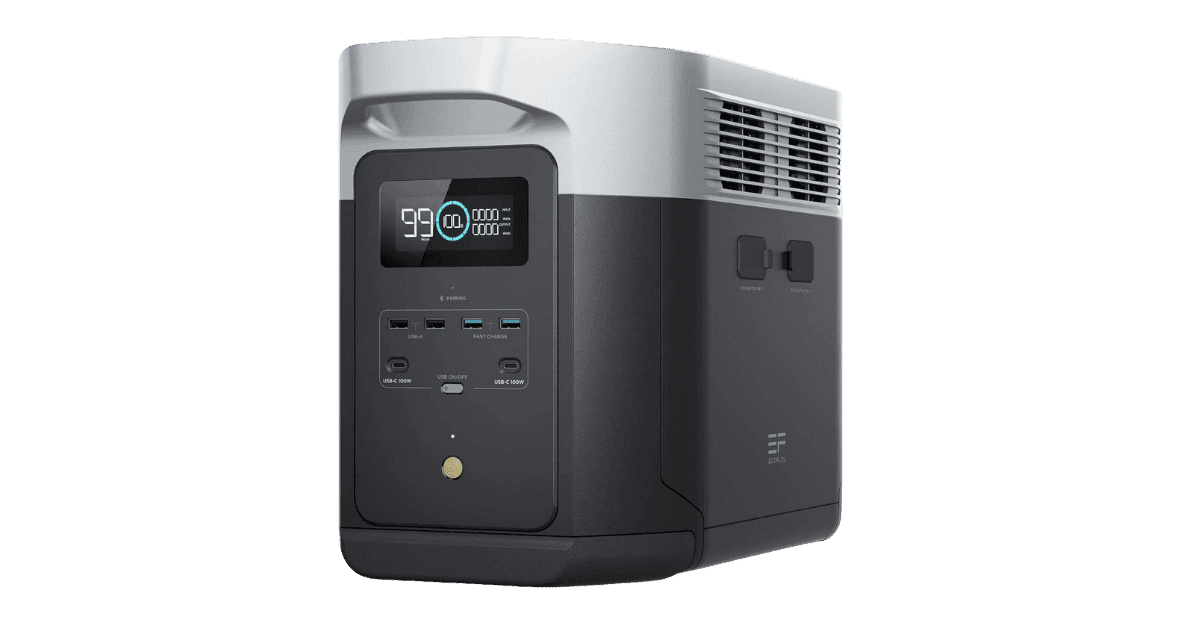
2,048Wh (expandable to 6,144Wh) • 2,400W output • $1,399
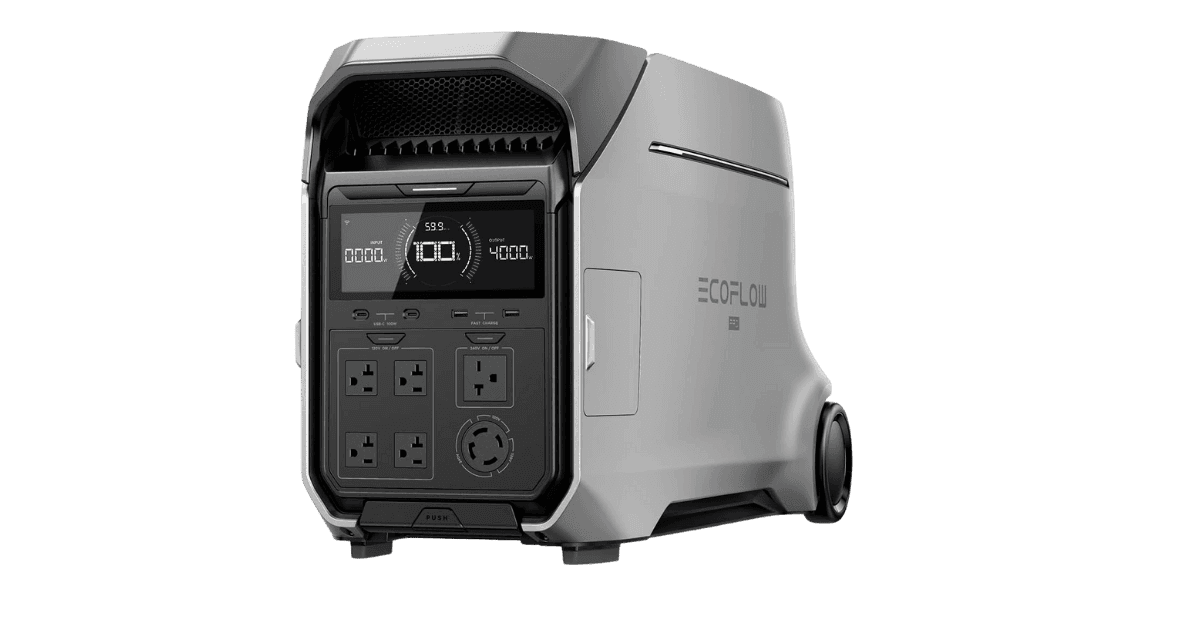
4,096Wh (expandable to 12,288Wh) • 4,000W output • $2,999
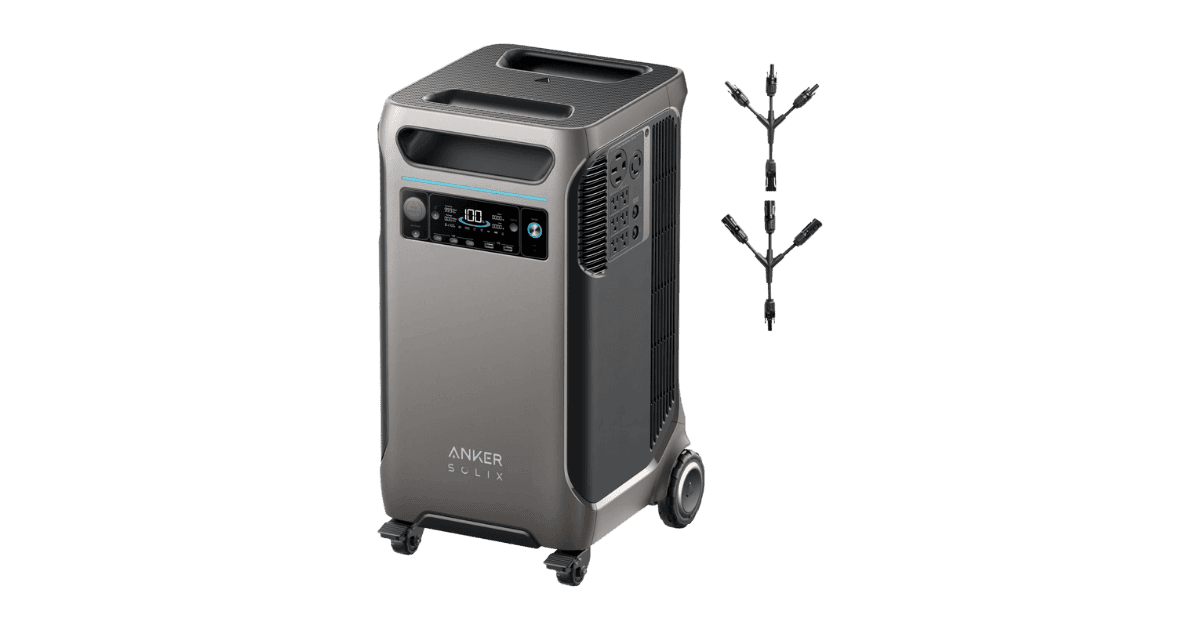
3,840Wh (expandable) • 6,000W output • $3,999
Many savvy preppers use both: a power station for daily backup and quiet nighttime use, and a gas generator as a backup for extended outages. You can even use a gas generator to recharge your power station — run the generator for 1-2 hours to charge the battery, then use the silent power station for the remaining 22 hours.
Run a gas generator during daytime to charge your power station, then use the power station silently overnight. This reduces generator runtime by 80% while ensuring 24/7 power coverage.
Live in an apartment or condo • Need quiet operation • Want zero maintenance • Use for camping, tailgating, or events • Need indoor backup power • Want solar recharging capability • Have moderate power needs (under 3,000W)
Need 5,000W+ continuous output • Have a well pump or central AC • Need multi-day continuous power • Work on construction sites • Already own one and it meets your needs
Want primary quiet power + backup for extended outages • Need flexibility for different scenarios • Live in areas prone to week-long outages (hurricane zones)
For 80% of American households, a portable power station is the better choice. Modern units with 2,000-4,000Wh capacity can handle most outages (which average 8 hours), are safe for indoor use, require zero maintenance, and can be recharged with solar panels for indefinite off-grid power.
Gas generators still make sense for specific high-power applications and truly extended outages lasting multiple days. But the era of noisy, smelly generators as the default backup solution is ending.
Use our free calculator to find the perfect power station for your needs.
Try the Calculator →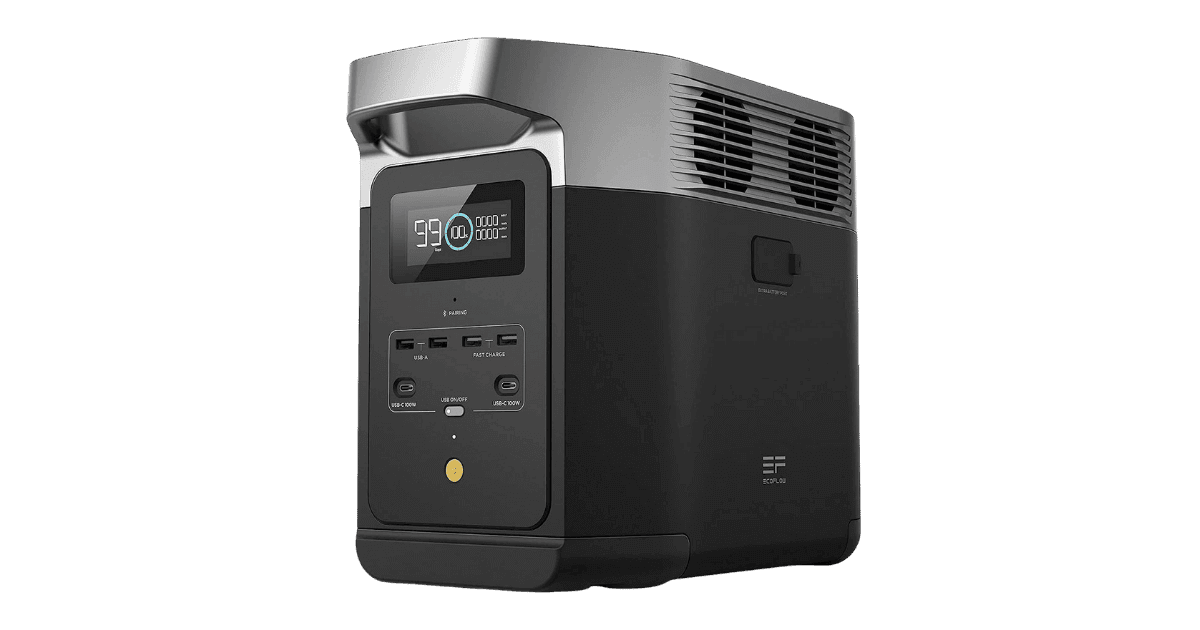
EcoFlow
1024Wh
Capacity
1800W
Output
27 lbs
Weight
3000+
Cycles
The best-selling portable power station with ultra-fast charging and expandable capacity.
EcoFlow
2048Wh
Capacity
2400W
Output
50 lbs
Weight
3000+
Cycles
Double the capacity of DELTA 2 with expandable power for serious backup.
EcoFlow
4096Wh
Capacity
4000W
Output
113.5 lbs
Weight
4000+
Cycles
4096Wh expandable to 48kWh. 120V/240V dual voltage, 6000W X-Boost. IP65 rated, 30dB quiet, 10ms UPS.
Anker
3840Wh
Capacity
6000W
Output
132 lbs
Weight
3000+
Cycles
Anker's most powerful home backup solution with NEMA 14-50 outlet.
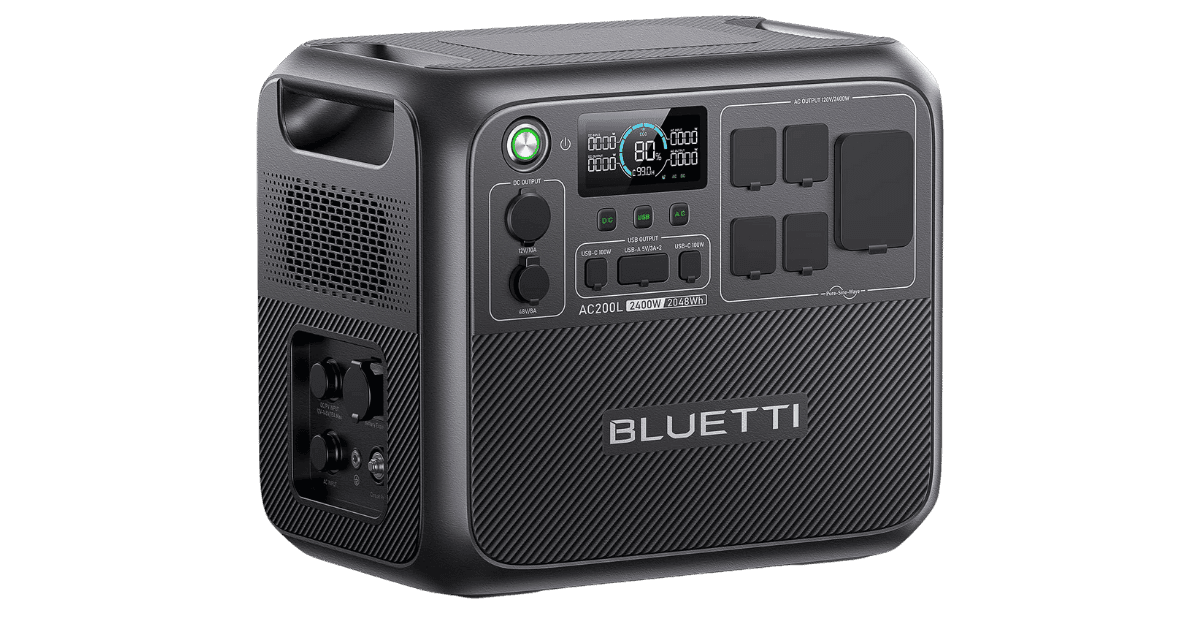
Bluetti
2048Wh
Capacity
2400W
Output
62.4 lbs
Weight
3000+
Cycles
2400W with 3600W Power Lifting. 30A TT-30 RV port, expandable to 8192Wh. 20ms UPS, WiFi/Bluetooth app.
Use our calculator to find the perfect portable power station for your needs.